
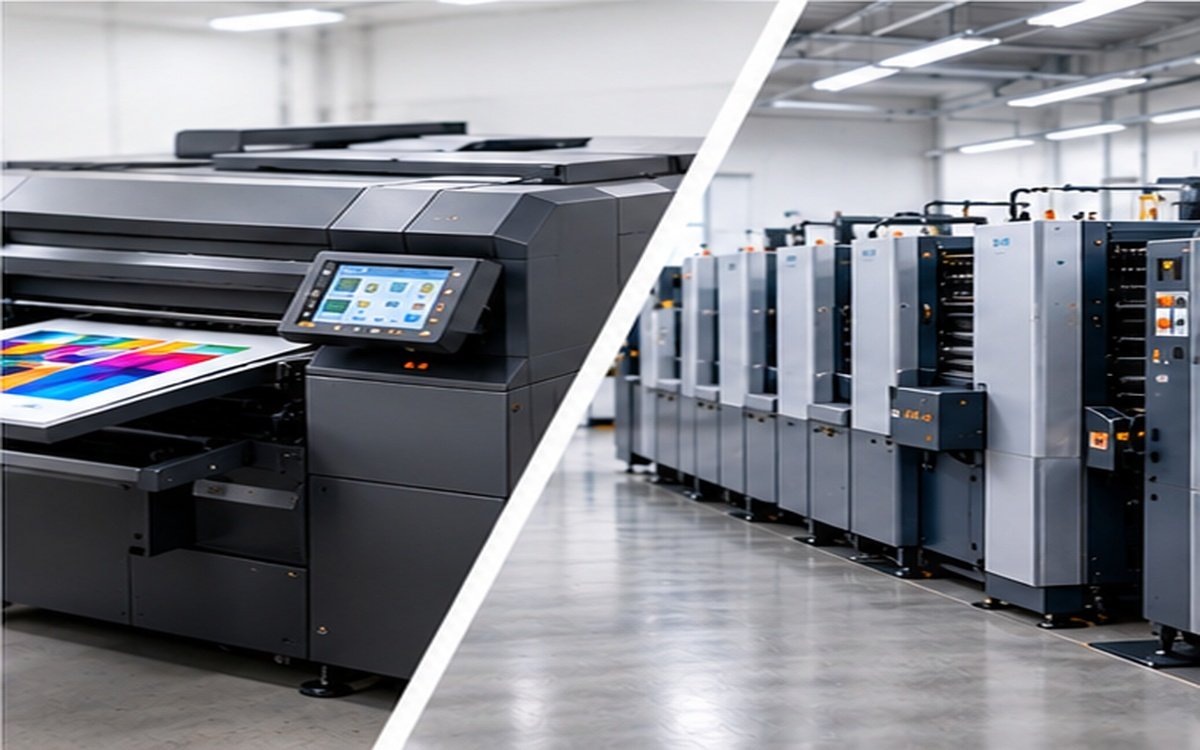
Digital and offset printing are both established commercial printing methods. The appropriate process depends on factors such as quantity, turnaround time, artwork, material requirements and project specifications.
How digital printing works
Digital printing transfers artwork directly from a digital file to the printing system. It is useful for many short and medium quantity projects and can offer efficient turnaround.
How offset printing works
Offset printing uses printing plates and an indirect ink-transfer process. It is commonly used for larger production runs where consistent high-volume output is required.
Quantity matters
For smaller quantities, digital printing can be practical because it avoids traditional plate preparation. For larger quantities, offset production can become suitable depending on the project.
Colour and material considerations
Both processes can produce professional results, but the available materials, colour requirements and finishing options should be checked for each specific job.
Which process should you choose?
There is no single process for every project. A printer can compare quantity, artwork, material, turnaround and finishing requirements to determine an appropriate production method.
Need professional printing?
Discuss your printing requirement with Star Ever Digital Press in Coimbatore and choose the suitable material, quantity and finishing.
Get a Quote →